About
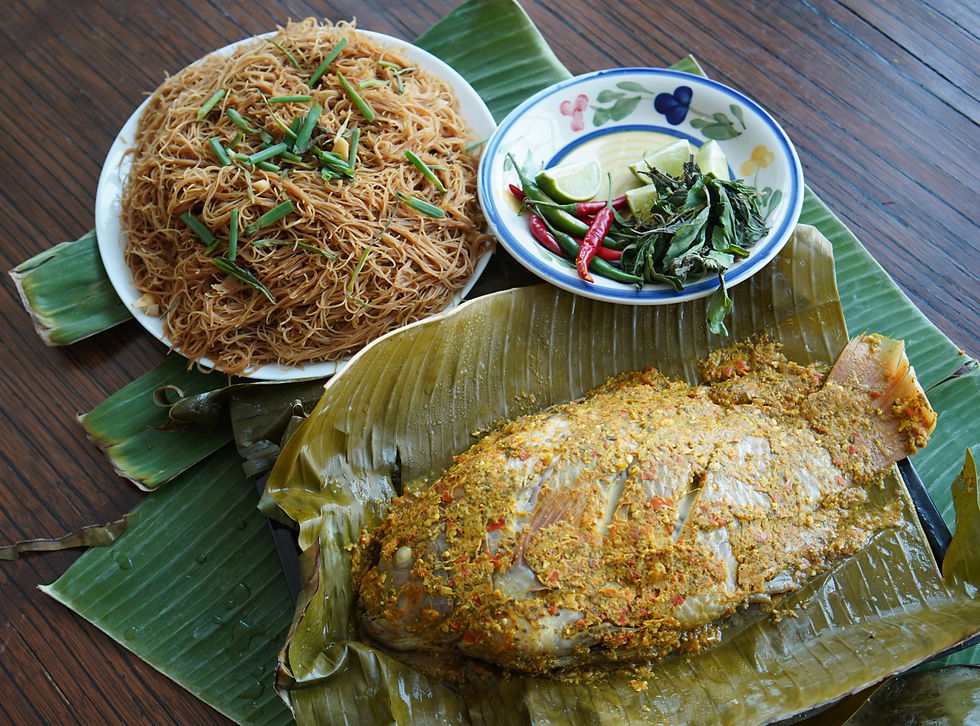
Ikan Pepes in East Timor isn’t just a recipe. It’s a snapshot of a country that has spent centuries caught between oceans, empires, and the stubborn will to stay itself. You taste the story as soon as you unwrap the banana leaf and the steam hits your face—briny fish from the Timorese coast, coconut milk thick as monsoon air, chilies crushed into a paste that would make any grandmother in Dili nod with approval.
Pepes, the method, comes from nearby Indonesia—wrapping fish in leaves, letting the fire or steam work its slow magic. But East Timor took that idea and made it something else entirely. Something quieter. Something with the echoes of Portuguese kitchens and the soul of an island that has learned to survive on what the sea gives and what the land allows.
Where Indonesia throws a whole cabinet of spices at you, Timor whispers. The curry paste is fragrant but restrained—lemongrass, turmeric, garlic, ginger, all rounded out by coconut milk that softens the edges. A squeeze of lime brightens it. Bay leaf, that unmistakably Portuguese handprint, sneaks in and does what it does best: deepen everything without drawing attention to itself. The result is a dish that feels like a crossroads—Austronesian roots, Indonesian technique, Portuguese nostalgia—woven into something unmistakably Timorese.
And that’s the thing about East Timor. The food looks simple, but the story behind it never is. This is a place where bread sits next to cassava, where olive oil has a seat at the same table as coconut milk, where fishermen still head out at dawn for the catch that will become someone’s dinner, wrapped in leaves and steamed in the same way their ancestors did long before any colonizer showed up.
Eat Ikan Pepes in a Timorese village and you’ll understand it better.
Someone hands you a parcel of banana leaf—still warm, charred around the edges—and you sit on a wooden stool while the smoke from the fire drifts into the canopy. You open it and the aroma hits you: sea and earth, history and adaptation, everything this young country has held onto and everything it has endured.
It’s not fancy. It’s not meant to be. It’s honest food—food that tells you exactly where you are.
A blend of cultures, yes, but ultimately a dish that belongs to no one but East Timor.

_edited.jpg)
.jpg)
INGREDIENTS
For the fish:
4 whole fish (snapper, mackerel, or tilapia), cleaned
2-4 banana leaves (or aluminum foil as a substitute), cut into large rectangles
1 lime, sliced
Salt, to taste
For the curry paste:
4 shallots, finely chopped
4 cloves garlic, minced
1-inch piece ginger, grated
2 red chilies, finely chopped (adjust for spice level)
1 tsp turmeric powder
1 tsp shrimp paste or fish sauce (optional, for an authentic flavor)
2 lemongrass stalks, white parts only, finely chopped
handful of basil
2 tbsp vegetable oil
1 tsp sugar
For garnish:
Fresh basil leaves or Thai basil
Lime wedges

Small Book Big Flavor Vol. 1 is your essential guide to transforming everyday meals into culinary delights with minimal effort. This compact book reignites the joy of home cooking by offering easy-to-follow recipes and practical tips that infuse bold flavors into your dishes. Whether you're a beginner or an experienced cook, you'll find inspiration in its diverse, globally-influenced ideas, from creamy chicken curry to flavorful pilaf rice. Embrace the art of soulful, memorable home cooking and make every meal an event with this indispensable culinary resource.
Instructions
Prepare the fish:
Clean and pat the fish dry with paper towels. Score the fish with three cuts on each side
Rub the fish with a little salt and lime juice, then set aside to marinate for about 15 minutes.
Make the curry paste:
In a blender combine shallots, garlic, ginger, chilies, turmeric, shrimp paste or fish sauce (if using), sugar and lemongrass.
Assemble the packets:
Lay out the bottom banana leaf (or aluminum foil).
Spoon the curry paste generously on the banana leaf and put the fish on top. Spoon the rest of the curry paste in and on the fish, ensuring it’s well coated.
Wrap the fish tightly in the banana leaf or foil, folding the edges to seal. I used toothpicks to make sure it was sealed but you can also use butchers twine.
Cook the fish:
Steam: Place the wrapped fish in a steamer basket and steam for 15-20 minutes, or until the fish is cooked through.
Grill: Place the wrapped fish on a hot grill or grill pan. Cook for about 6-8 minutes on each side, ensuring the fish is cooked and the banana leaves are lightly charred.
Serve:
Carefully unwrap the fish and transfer to a serving plate.
Garnish with fresh basil and serve with steamed rice or a simple salad. Add lime wedges on the side for extra flavor.


